

ESTJ (Executive) is one of the 16 MBTI personality types, characterized by a realistic, highly responsible nature and strong leadership ability to organize and lead groups.
In this article, we explain recommended careers that leverage ESTJ strengths, as well as the characteristics of jobs that ESTJs tend to find stressful and are not well-suited for. Understanding your own traits will help you broaden your career options and build a more fulfilling path.
What Is ESTJ (Executive)? Strengths in the Workplace
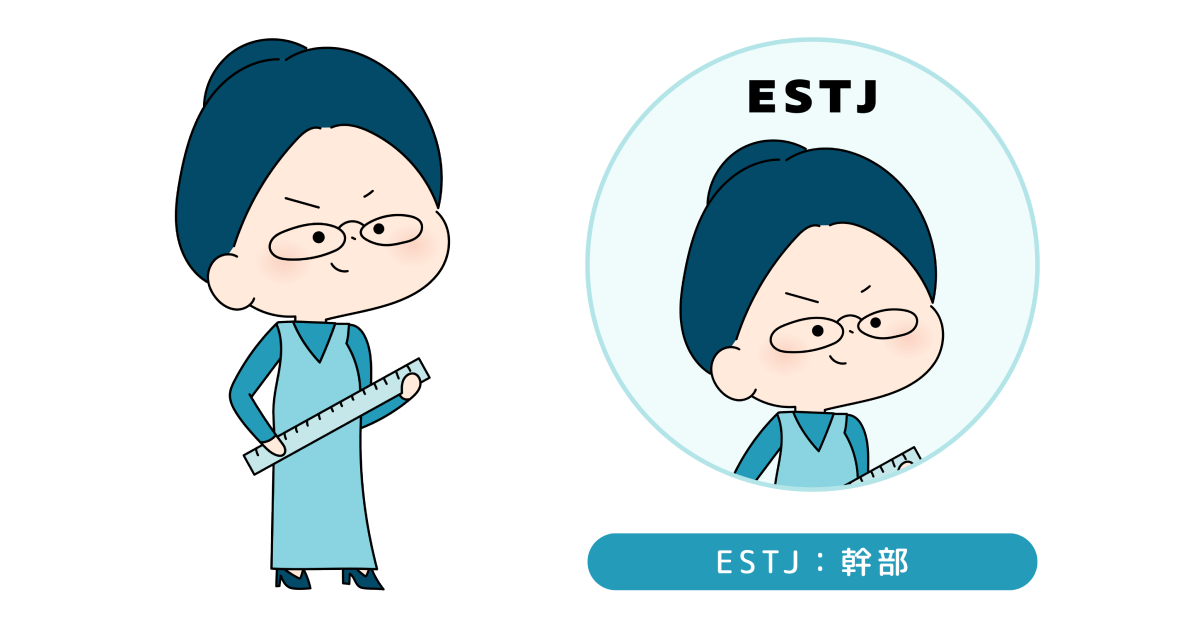
ESTJ is a personality type that combines four indicators: Extroversion (E), Sensing (S), Thinking (T), and Judging (J).
ESTJs tend to think practically and logically, and place great importance on rules and order. In the workplace, these traits manifest as outstanding aptitudes that contribute to the organization.
The specific strengths ESTJs possess are as follows.
- High management ability and leadership skills
- Strong execution ability and sense of responsibility
- Skilled at creating rules to improve productivity
High Management Ability and Leadership Skills
ESTJs excel in the ability to organize and lead teams toward achieving goals.
They possess a natural leadership quality, and are skilled at setting a clear vision and guiding others. They approach things systematically, accurately judge who should be responsible for what, and drive projects forward in a planned manner.
Their leadership is relied upon in many situations and serves as the driving force that maximizes the performance of the entire team. By clarifying member roles and building a disciplined environment, they have the power to achieve stable organizational management.
Strong Execution Ability and Sense of Responsibility
A powerful sense of responsibility and execution ability to see through any goal decided upon or task accepted until the very end is a major strength of ESTJs.
Even when faced with difficult challenges, they never give up, find practical solutions, and move steadily forward. They dislike plans that fall apart and find value in producing results through concrete action.
Those around them highly evaluate their tenacity and their practice of following through on their word, earning them trust. Because they approach every job with full responsibility until the end, they tend to be entrusted with important positions.
Skilled at Creating Rules to Improve Productivity
ESTJs excel at improving inefficient procedures and ambiguous situations, and constructing clear rules and systems.
They objectively analyze the current situation and improve overall organizational productivity by introducing mechanisms that allow things to proceed more efficiently. They have the ability to design optimal processes based on logical judgment, rather than clinging to existing ways of doing things.
Because they value order and consistency, the rules that ESTJs establish are easy for anyone to understand and can be applied fairly. They play an important role in stabilizing the organization’s foundation and supporting sustainable growth.
15 Recommended Careers That Leverage ESTJ (Executive) Strengths

ESTJ’s leadership, execution ability, and order-respecting nature are highly valued in certain careers. Here, we introduce 15 jobs suited for ESTJs and explain why each is a good fit.
“Business Consultant” — Improving Organizational Productivity
Business consulting, which involves objectively analyzing a company’s challenges and proposing efficient business processes, is a career where ESTJ’s logical thinking and problem-solving abilities shine. The role involves identifying inefficiencies in client organizations and constructing new rules and systems as concrete improvement measures. Because you can directly contribute to improving organizational productivity by deriving optimal solutions based on facts and data, the work offers great fulfillment.

“PdM (Project Manager)” — Requiring Planning and Execution Ability
A PdM (Project Manager) is a position that bears full responsibility for everything from project goal-setting and planning to resource management and progress management.
ESTJ’s superior management ability, leadership, and execution ability to see plans through to the end are indispensable. By clarifying team member roles and completing projects on schedule, you can gain a sense of achievement from contributing to the organization.

“Corporate Planning” — Leading the Organization with Logical Thinking
Corporate planning, which involves formulating business strategies and management plans with an eye on the company’s future, is a job that demands ESTJ’s logical and long-term perspective. It involves analyzing market trends and the company’s own situation based on data and defining the direction the organization should take.
The process of setting clear goals and mapping out the specific path to achieve them is a field where ESTJ’s planning and execution abilities can be maximized.

“Civil Servant / Police Officer” — Valuing Rules and Order
Civil servants and police officers, who protect social order and safety, are a very good match for ESTJ’s disciplined nature and adherence to rules. Because they are required to act based on a clear hierarchical system and laws and regulations, it is an environment where ESTJs can confidently demonstrate their abilities.
A strong sense of mission and responsibility for supporting the foundation of society connects to motivation at work.
“Lawyer / Administrative Scrivener” — Solving Problems with Legal Expertise
Lawyers and administrative scriveners, who solve problems based on the clear rules of law, are specialized professions where ESTJ’s logical thinking and commitment to fairness can be utilized.
The process of accurately organizing facts and deriving optimal solutions based on legal grounds is an area of ESTJ expertise. The ability to contribute to the realization of social justice is also a major attraction for ESTJs.
“Construction Manager” — Bringing the Worksite Together
Construction management, which involves supervising the entire project by managing quality, cost, schedule, and safety at a construction site, is a career where ESTJ’s leadership and planning abilities are directly applicable.
You will find great fulfillment in leading a team of many workers and specialized contractors toward the clear goal of completing a building on schedule.
“Bank Employee” — Skilled at Accurate Numerical Management
Bank work is a job that requires accurate execution in accordance with rules and procedures. ESTJ’s meticulousness and adherence to rules are highly valued in the finance industry, where trustworthiness is paramount.
In particular, they can demonstrate their abilities in work such as loan screening and corporate sales, which involve analyzing a company’s financial situation and making logical judgments.
“Accounting / Finance” — Supporting a Company’s Finances
Accounting and finance work, which manages a company’s economic activities numerically and provides information that forms the basis for management decisions, is suited to ESTJ’s accuracy and meticulousness. It requires proceeding with tasks accurately and without errors in accordance with established accounting standards and internal rules.
The responsible role of managing the important element of organizational finances satisfies ESTJ’s sense of responsibility.
“Tax Accountant” — Handling Assets with Specialized Knowledge
Tax accountants, who support clients’ tax affairs based on the specialized rules of tax law, are also well-suited for ESTJs. The ability to accurately interpret complex laws and apply them logically is essential.
It is a specialized profession that contributes to society by protecting client assets and supporting proper tax payment, and it is a field where ESTJ’s sense of fairness and responsibility come to life.
“Quality Control / Quality Assurance” — Adhering to Standards and Protecting Quality
Work that confirms whether products and services meet certain standards and guarantees their quality is an area where ESTJ’s rule-respecting attitude and attention to detail can be utilized.
By setting clear quality standards and rigorously checking whether operations are being conducted in accordance with those standards, they play an important role in supporting a company’s credibility.
“Investor” — Analyzing Data and Reading the Market
Investors, who analyze objective data such as a company’s financial condition and market trends, and make investments based on logical judgment, require ESTJ’s analytical ability and decisiveness.
For ESTJs, who excel at making calm, fact-based judgments without being swayed by emotion, it can be said to be a challenging field where they can test their abilities.
“General Affairs” — Organizing the Foundation of Organizational Operations
General affairs is work that supports the smooth running of the entire organization, such as maintaining internal regulations and managing the office environment. Management ability and the ability to build efficient systems are directly useful.
It is a role in which you can easily feel that you are contributing to the entire company by supporting the organization’s foundation and creating an environment where employees can work comfortably.
“Real Estate Industry” — Correctly Evaluating the Value of Properties
In the real estate industry, particularly in areas such as real estate appraisal and sales brokerage, the ability to evaluate the value of properties based on objective data and laws and explain it logically to clients is required. It is a job where ESTJ’s fact-focused attitude and character that values fair transactions come to life. The sense of responsibility that comes with handling large sums of money also heightens ESTJ’s motivation.
“Wholesale Business” — Managing the Supply Chain
The wholesale business, which connects manufacturers and retailers and is responsible for the stable supply of goods, requires efficient logistics systems and inventory management. The process of optimizing the entire supply chain and moving goods as planned is an ideal environment for demonstrating ESTJ’s management ability and planning skills.
It plays an important role in supporting the infrastructure of society.
“Business Owner” — Leading an Organization with Your Own Vision
Business owners, who establish and lead organizations to realize their own vision, represent one of the roles where ESTJ’s strengths of leadership, decisiveness, and sense of responsibility can be most fully demonstrated. You will find great fulfillment in the process of setting clear goals and moving the entire organization toward their achievement. They have the ability to make realistic judgments even in difficult situations and lead the organization to success.
3 Characteristics of Jobs ESTJ (Executive) Should Avoid

While ESTJs can demonstrate their abilities in many jobs, there are also jobs that they tend to find stressful due to their personality. Here, we explain the characteristics of jobs ESTJs should avoid.
Jobs Where Rules and Roles Are Ambiguous and Fluid
Because ESTJs demonstrate their abilities within clear structures and rules, they tend to find jobs where role assignments, work content, and goals frequently change stressful. In environments where the chain of command is unclear and things must be advanced based on individual discretion and on-the-spot judgment, they cannot make use of their inherent planning ability, and they can become confused about what is right.
Rather than tackling unprecedented challenges independently, they want to produce steady results by following established procedures, so some start-up companies and parts of rapidly changing industries may not be suitable.
Jobs Where Originality and Artistic Sense Are the Top Priority
For ESTJs who value practical and concrete results, jobs where subjective values such as originality and artistic quality are the center of evaluation tend to be unsuitable.
For example, professions such as artist, novelist, and designer have no objective right answer, and personal sensibility and inspiration are important.
Because ESTJs prefer environments where they are evaluated based on logic and facts, they may feel confused about work that deals with abstract concepts or tasks where emotional expression is the main purpose.
Self-Contained Jobs Done Alone in Silence
ESTJs are extroverted and find joy in cooperating with others and achieving goals as a team. Therefore, self-contained jobs where little communication with others occurs and you continue working alone in silence may make it difficult to maintain motivation.
In occupations that involve long periods of focused individual work, such as research, data entry, or long-haul driving, there are few opportunities to demonstrate leadership and management abilities, and you may feel a sense of dissatisfaction.
The Work Environment Where ESTJ (Executive) Can Perform at Their Best

The work environment is extremely important for ESTJs to bring out their abilities to the fullest and work with a sense of fulfillment. Here, we list the characteristics of work environments where ESTJs can perform at their best.
Clear Evaluation Criteria Where Results Are Fairly Recognized
ESTJs strongly desire to have their efforts and results evaluated fairly. Therefore, they demonstrate their abilities most in environments where evaluation criteria are clearly defined by objective indicators such as numbers and specific goal achievement rates.
A meritocratic organizational culture where it is clear who achieved what and promotions and compensation are determined based on contribution greatly enhances ESTJ’s motivation.
Conversely, in workplaces where the evaluation criteria are vague and a supervisor’s subjectivity or personal relationships influence evaluations, they will feel a sense of unfairness.
Clear Hierarchical Structure with a Defined Chain of Command
Because ESTJs value order and structure, they prefer workplaces where the organizational hierarchy is clear and the chain of command — who is in charge and who to report to — is clearly defined. Knowing their own role and scope of responsibility clearly allows them to focus on their work with peace of mind and proceed efficiently.
Traditional companies and public institutions with a clear chain of command can be said to be easy environments for ESTJs to work in.
In flat organizations where roles are fluid, they may feel confused.
Stable Organizational Culture Where Tradition and Track Record Are Respected
ESTJs tend to respect the traditions, track records, and established business processes that have been built up over time.
They find value in learning from past success stories and using them as a foundation for improvement. Therefore, they tend to fit in well with the culture of companies and organizations that have history and a stable management base.
Because they prefer steady improvement over radical change, they find fulfillment in demonstrating their management abilities within a stable environment and contributing to the organization’s development.
Tips for ESTJ (Executive) to Build Smooth Workplace Relationships

While ESTJs demonstrate strong leadership, their directness can sometimes cause challenges in interpersonal relationships. Here, we introduce communication tips by role.
Give Specific Instructions and Feedback to Subordinates and Junior Colleagues
In their emphasis on efficiency, ESTJs may sometimes give instructions that come across as too blunt, or feedback that sounds harsh. To build good relationships with subordinates and junior colleagues, it is important to explain the purpose and background of the work and then give clear, easy-to-understand instructions.
When giving feedback, rather than simply pointing out errors, conveying logically why it happened, what can be done to improve it next time, and showing an attitude of supporting the other person’s growth will deepen the relationship of trust.
Accurately Understand the Expected Role from Superiors and Thoroughly Report
ESTJs are capable and can advance their work autonomously, but it is also important as a member of the organization to meet the expectations of superiors. First, accurately understand what your superior expects of you and what results they are expecting.
On top of that, be thorough in regularly reporting on the progress of work and any problems that arise.
Concise reports based on facts give superiors a sense of security and are highly evaluated as an attitude of contributing to the entire organization’s goal achievement.
Be Conscious of Fact-Based Communication with Colleagues
With colleagues, it is effective to be conscious of avoiding emotional confrontations and communicating based on objective facts and data. When asserting your opinion, explaining it with logical reasons for why you think so makes it easier to gain the other person’s understanding.
Also, when listening to others’ opinions, rather than reacting emotionally, it is important to first accept them as facts and take an attitude of organizing the points of discussion. Aim for constructive exchanges of opinions as partners cooperating to achieve goals together.
What Are the Differences in Work Style Between ESTJ-A and ESTJ-T?

ESTJ has two subtypes — ESTJ-A (Assertive) and ESTJ-T (Turbulent) — and differences also appear in their work styles.
ESTJ-A tends to be confident and have high stress tolerance. Even in high-pressure situations, they make calm judgments and powerfully lead the team as a leader. They are confident in their decisions and are not shaken by adversity, which is why they tend to make decisions quickly.
On the other hand, ESTJ-T is more cautious and tends to care about the opinions and evaluations of those around them. They are always looking for areas for improvement and striving for perfection, so they tend to produce high-quality work. They take feedback from others sincerely and try to use it for personal growth, but they also tend to take on stress easily.
Specific Steps for ESTJ (Executive) to Succeed in Finding the Right Career

For ESTJs to find a career that suits them and succeed in job hunting or a career change, a strategic approach is effective. Here, we introduce three specific steps.
Review Your Past Successes and Verbalize Your Strengths
First, start by looking back at past experiences and concretely verbalizing your strengths.
Write down experiences from student club activities, part-time jobs, or previous jobs where you demonstrated leadership to achieve goals, or improved an inefficient situation. By specifically organizing “in what situation,” “what you identified as a challenge,” “how you acted,” and “what results came about,” the persuasiveness of your self-PR increases and you can see the axis of work where your strengths can be utilized.
Thoroughly Research Company Organizational Structures and Evaluation Systems
For ESTJs, organizational culture and systems are factors that greatly affect job satisfaction. When you find a company you are interested in, research its organizational structure and evaluation system thoroughly.
Use the company’s official website and recruitment pages, employee interview articles, and review sites to check points such as “Is the hierarchy clear?”, “Is the chain of command well-defined?”, and “Are the evaluation criteria objective?”.
Determining in advance whether the environment matches your values is the key to preventing a mismatch after joining the company.
Appeal Specifically in Interviews with Experiences of Demonstrating Leadership
In interviews, it is important to appeal with the verbalized strengths using specific episodes.
Rather than conveying abstractly “I have leadership,” talk about specific actions and results as a set, such as “In a project where I led a team of five, by clarifying the role of each member and holding weekly progress meetings, we achieved the deadline one week ahead of schedule.”
This allows the interviewer to specifically imagine the applicant being active after joining the company.
Frequently Asked Questions About ESTJ (Executive)

Here, we have compiled frequently asked questions and answers about the career and personality of ESTJ (Executive) types.
Summary
ESTJ (Executive) can demonstrate high performance in many careers by leveraging their excellent leadership, execution ability, and order-respecting personality.
In particular, they can maximize their abilities in environments with clear rules and structure, such as management roles, civil service, and specialized professions in law and finance. On the other hand, they tend to find stressful work where rules are ambiguous and creativity is required, or work that is completed independently.
Deeply understanding your own strengths and weaknesses, and choosing a workplace with clear evaluation criteria and a stable organizational culture, is the key to ESTJs finding fulfillment and thriving over the long term. Please use the suitable careers and career selection steps introduced in this article as a reference to find the path most suited to you.


