

Self-analysis is essential when aiming to become a consultant. One tool that has been gaining attention in recent years as an efficient method for self-analysis is the MBTI assessment.
The MBTI assessment helps you objectively understand your tendencies in thinking and decision-making. Through the results, you can gain insight into whether you are suited to consulting and what your strengths and weaknesses are.
In this article, we introduce MBTI types well-suited for consulting in a ranked format. We also share tips for thriving as a consultant even if your MBTI type is not in the ranking, so please use it as a reference.
【関連記事】大手コンサルティング会社一覧|未経験からコンサルタントに転職する方法|第二新卒でコンサルタントに転職する方法|コンサルタントの種類一覧|コンサルタントの仕事内容|ITコンサルタント求人の一覧|未経験OKのコンサル求人一覧|リモート可のコンサル求人一覧
What is MBTI? A Self-Analysis Tool That Classifies Personality into 4 Dimensions

MBTI (Myers-Briggs Type Indicator) is a self-analysis tool that indicates an individual’s mental processes and direction of interest.
It classifies personality into 16 types based on the following 4 distinct dimensions.
- Direction of energy (E = Extraversion, I = Introversion)
- Way of perceiving (S = Sensing / N = Intuition)
- Way of judging (T = Thinking / F = Feeling)
- Approach to the outer world (J = Judging / P = Perceiving)
The combination of letters allows you to understand an individual’s innate personality tendencies. As it serves as a clue to deepen self-understanding, it is effective for self-analysis before starting a job search or career change.
It is purely a part of self-analysis and is not meant to measure superiority or inferiority of ability.
\ 30秒で完了! /
Why MBTI Is Attracting Attention in the Consulting Industry

MBTI is useful for objectively understanding your own and your team members’ thinking patterns and communication styles.
Consulting projects are composed of members with diverse backgrounds. Understanding the characteristics of yourself and others, and building a smooth bridge between them, is made more effective through awareness of MBTI.
There is also the benefit that team building and effective role allocation become possible, leading to improved project productivity.
\ 転職エージェントがご相談に乗ります /
MBTI Types Well-Suited for Consulting: A Ranking
Here, we introduce the MBTI types considered well-suited for consulting in a ranked format.
MBTI types that possess qualities such as logical thinking, strategic perspective, and leadership are considered to have a high aptitude for consulting work.
However, this ranking merely indicates general tendencies. It does not guarantee that a specific type is suited for consulting, nor does it definitively state that other types are unsuitable.
[1st Place: ENTJ (The Commander)] Leading Teams to Success with Natural Leadership
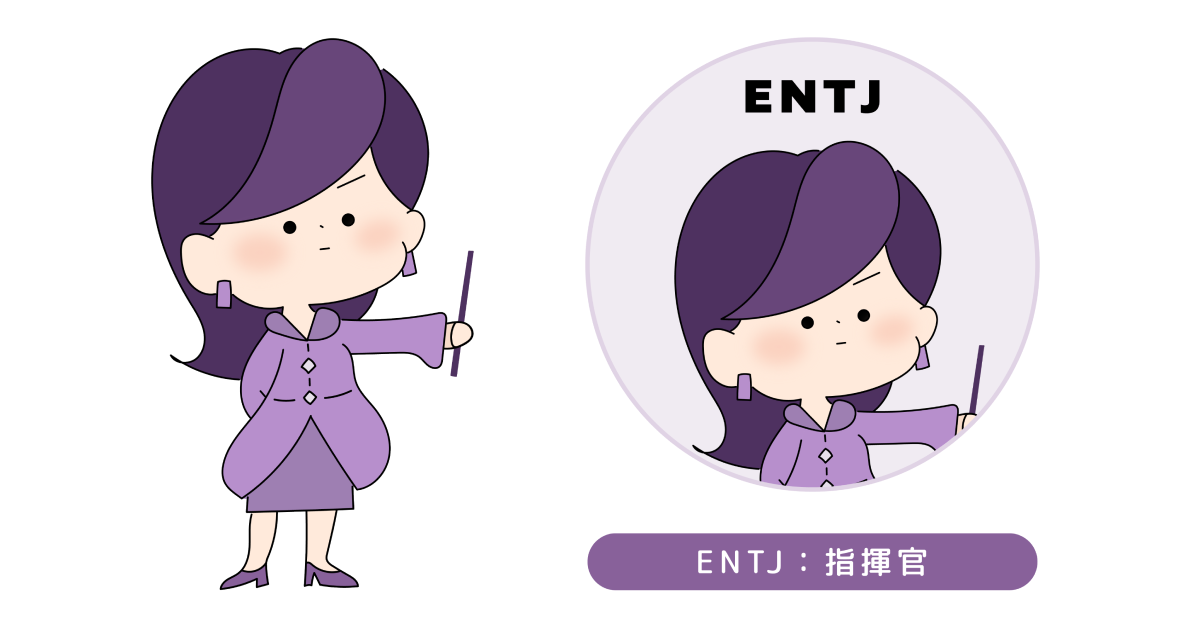
- E: Extraverted
- N: Intuitive
- T: Thinking
- J: Judging
ENTJ (The Commander) possesses innate leadership and strong decisiveness. They excel at developing long-term strategies and finding efficient solutions even for complex challenges.
Their ability to unite a team and powerfully drive it toward goal achievement embodies exactly the qualities required of a consultant. Their ability to present a clear vision to clients and drive projects to success is highly valued.
The rationality and confidence of ENTJs serve as a driving force that moves people even in difficult situations and generates concrete results.
[2nd Place: INTJ (The Architect)] Solving Complex Problems with Unique Strategy
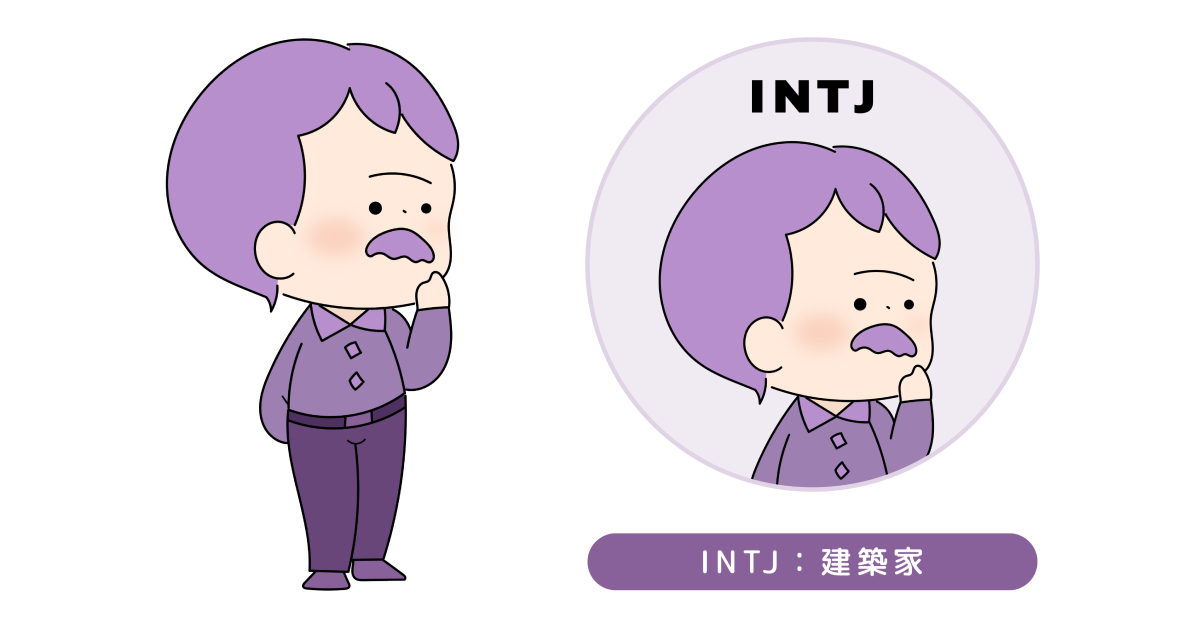
- I: Introverted
- N: Intuitive
- T: Thinking
- J: Judging
The hallmark of INTJ (The Architect) is their original perspective and excellent strategic thinking ability. They have strong intellectual curiosity, are constantly seeking optimal solutions, and excel at generating innovative ideas.
INTJ’s strategic approach leads to providing unique value to clients’ management challenges that others cannot match. Their ability to see through the essence of things and accurately grasp the big picture of complex problems means they are particularly well-suited as strategy consultants.
[3rd Place: ENTP (The Debater)] Presenting New Perspectives with Sharp Thinking and Flexibility
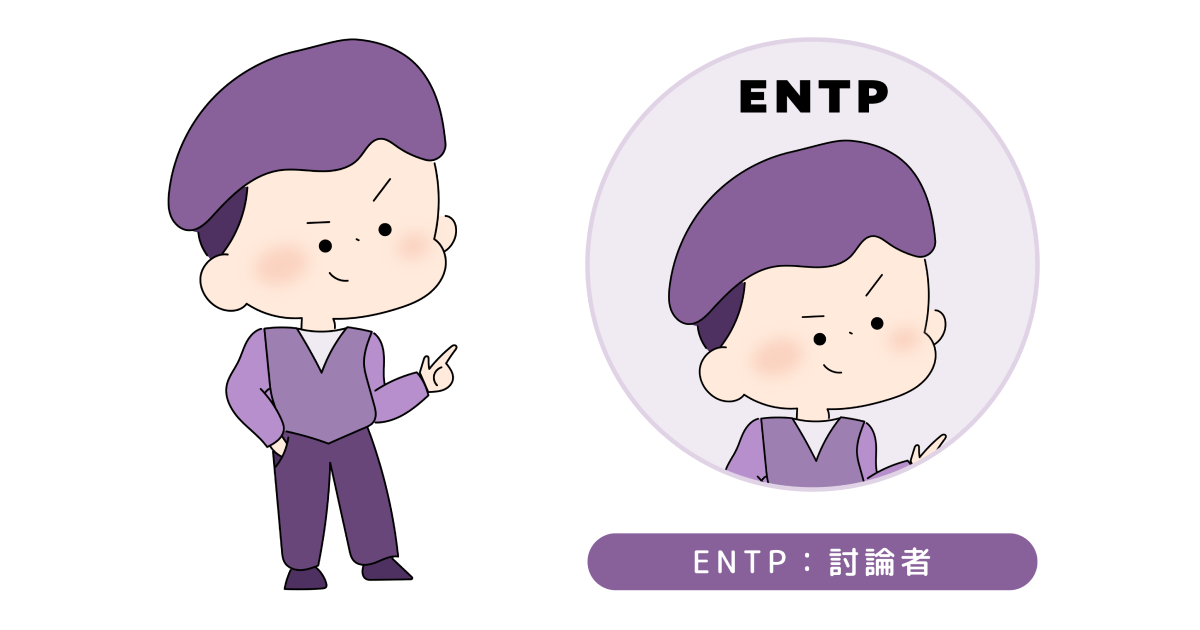
- E: Extraverted
- N: Intuitive
- T: Thinking
- P: Perceiving
ENTP (The Debater) thinks quickly and possesses flexible ideas unconstrained by existing concepts. They enjoy intellectual challenges and generate innovative ideas while exploring all possibilities through discussion.
ENTPs maximize their abilities in brainstorming and discussion settings.
By presenting new angles that break through conventional wisdom for challenges clients face, they bring great momentum to projects. Their sharp thinking and quick-witted responsiveness are highly valued in a rapidly changing business environment.
[4th Place: INTP (The Logician)] Thoroughly Analyzing Data with Intellectual Curiosity
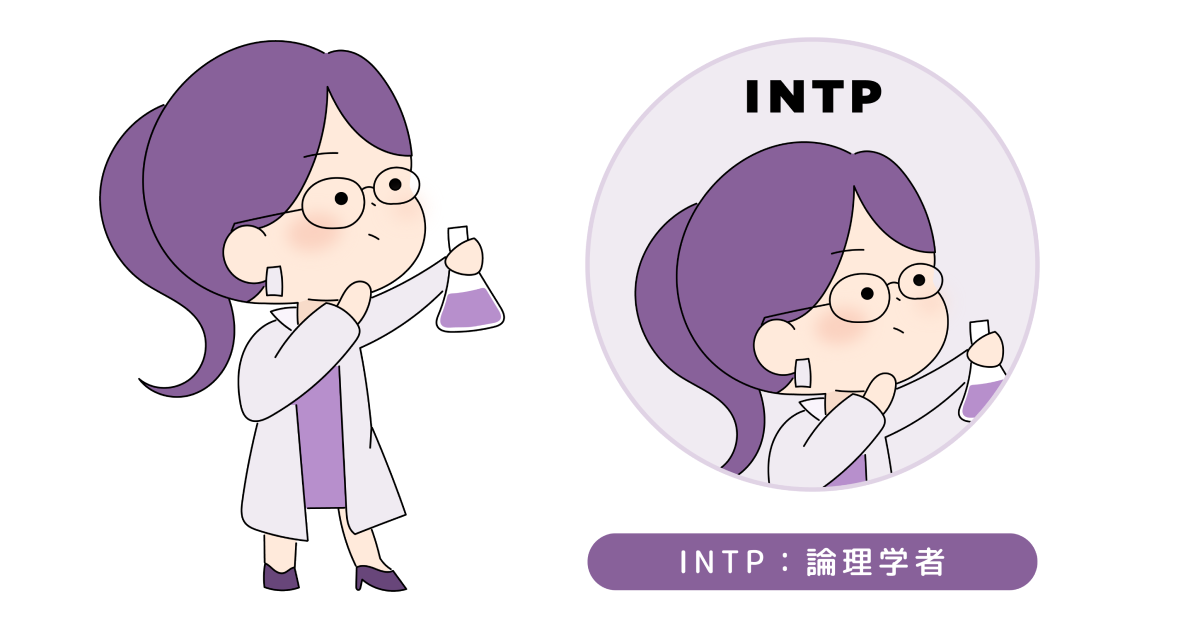
- I: Introverted
- N: Intuitive
- T: Thinking
- P: Perceiving
INTP (The Logician) is characterized by their strong intellectual curiosity and outstanding analytical ability. They excel at handling complex theories and vast amounts of data, and explore the logic and principles underlying things.
Their deep insight allows them to derive fundamental solutions to clients’ challenges. Especially in situations where research and data analysis determine the success or failure of a project, INTP’s abilities are highly valued.
Recommendations based on objective facts and analysis serve as powerful support for clients’ decision-making.
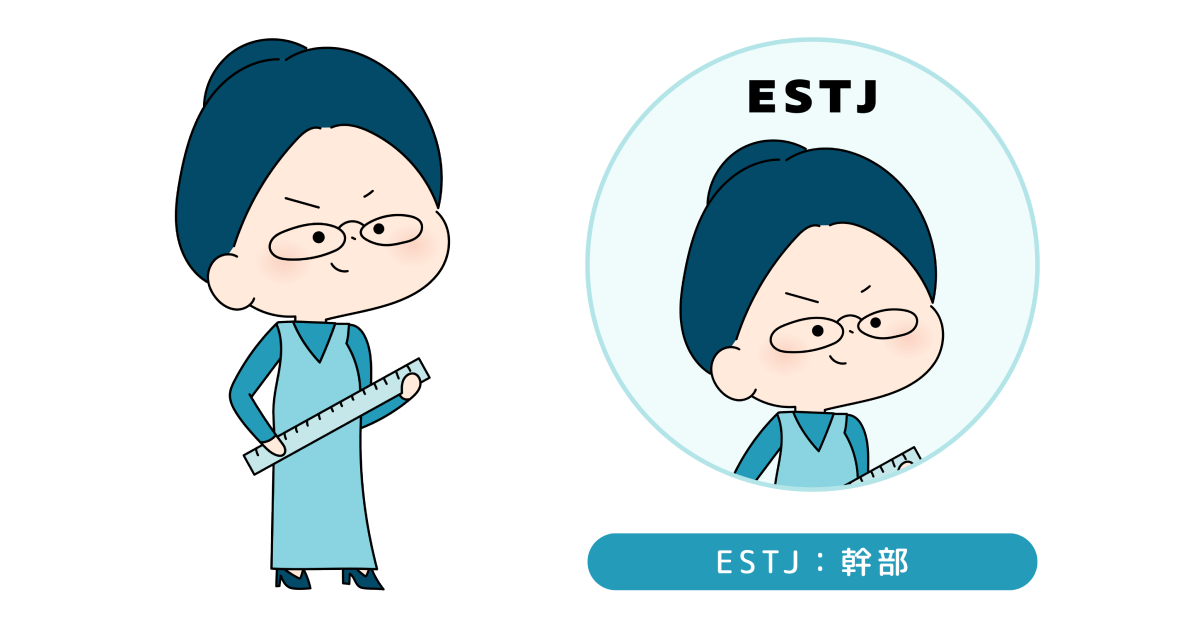
[5th Place: ESTJ (The Executive)] Managing Projects with a Practical Approach
- E: Extraverted
- S: Sensing
- T: Thinking
- J: Judging
ESTJ (The Executive) excels at advancing things with a practical and organized approach. They are skilled at steadily managing and executing tasks based on clear rules and plans. With their inherent sense of responsibility and execution ability, they advance projects according to plan and generate concrete results.
In the consulting field, they demonstrate their strengths in the role of translating formulated strategies into concrete execution plans and managing the entire project. The ability to make objective judgments based on facts and efficiently operate organizations is an indispensable element in many projects.
【募集中のコンサルタント求人】
The article was not found.
Compatible MBTI Types by Consulting Specialty

Even within the consulting industry, the range is vast — from strategy consultants who formulate corporate management strategies to IT consultants who support the implementation of IT systems.
Here, we introduce the MBTI types considered to be well-matched for each major type of consulting.
Strategy & Management Consulting: INTJ, ENTJ, ENTP
Since strategy and management consulting addresses challenges at the core of a company, logical thinking and a bird’s-eye perspective are indispensable.
Therefore, “NT types” who excel at thinking logically based on facts are well-suited. In particular, the following 3 MBTI types are considered to have high aptitude.
- INTJ (The Architect)
- ENTJ (The Commander)
- ENTP (The Debater)
They excel at structurally grasping complex problems and generating original strategies and innovative solutions. Long-term planning and flexible adaptability to unknown situations are also important qualities required in strategy and management consulting.
IT & DX Consulting: INTP, ENFJ
IT and DX consultants play an important role in supporting companies’ digital transformation, and logical problem-solving ability and systems thinking are required.
The following 2 MBTI types have aptitude for IT and DX consulting.
- INTP (The Logician)
- ENFJ (The Protagonist)
INTPs excel in intellectual curiosity and analytical ability, and are skilled at deeply exploring complex IT system challenges and finding logical solutions.
ENFJs leverage their high communication ability and empathy to contribute to smooth project progress as a coordinator between clients and teams.
HR & Organizational Consulting: INFJ, ESFJ
HR and organizational consulting is a specialized field that solves challenges related to the “people” within a company. It involves supporting employee motivation improvement and organizational transformation, requiring a deep understanding of people’s emotions and interpersonal relationships.
Therefore, highly empathetic “F types (Feeling types)” will be able to demonstrate their strengths. Specifically, the following 2 MBTI types are suited for HR and organizational consulting.
- INFJ (The Advocate)
- ESFJ (The Consul)
They empathize with people and promote smooth communication within organizations, contributing to sustainable corporate growth.
Finance & Financial Consulting: ISTJ, ESTJ
Finance and financial consulting is a field that solves specialized challenges related to corporate financing, investment strategy, risk management, and other money-related areas. Objective judgment based on accurate data analysis and execution ability to steadily carry out practical work are particularly emphasized.
Therefore, the following MBTI types, known for their practical perspective and organized approach, are considered to have high aptitude.
- ISTJ (The Logistician)
- ESTJ (The Executive)
ISTJs and ESTJs are skilled at thinking logically based on detailed information and advancing things according to plan. They will be able to understand the complex movements of financial markets and provide accurate advice to clients.
Essential Skills and Qualities for Consulting Work

To thrive as a consultant, there are basic skills and qualities commonly required regardless of MBTI type.
Here, we specifically introduce the skills and qualities considered essential for consulting work.
1. “Logical Thinking” to Identify the Core of Challenges
Logical thinking is the most fundamental skill for a consultant. The ability to go beyond the surface-level symptoms of challenges presented by clients, delve deeply into the underlying causes and structure, and identify the essence of problems is required.
Logical thinking is indispensable for organizing and analyzing information and data, going through the process of forming and verifying hypotheses, surfacing fundamental challenges, and guiding toward effective solutions. It is a skill that forms the foundation of all analysis and proposals.
2. “Organizational & Analytical Ability” to Break Down Complex Information
Consultants collect diverse information including market data, financial information, and interview content with stakeholders. To make persuasive proposals to clients, the ability to appropriately organize collected information and extract meaningful insights is indispensable.
Utilizing frameworks to structure information and conducting analysis based on objective facts enhances persuasiveness. In a complex business environment, organizational and analytical ability is extremely important for facilitating clients’ decision-making.
3. “Communication Ability” to Move People
Even excellent analysis and strategy creates no value if it cannot be communicated to others. Consultants are required to have high communication ability to convey their thoughts clearly and move clients and team members.
Presentation skills to explain concisely and logically to management, and listening skills to draw out candid opinions from on-site staff, are also included in communication ability. Additionally, facilitation ability to bring together the opinions of team members with diverse expertise and advance projects smoothly is also indispensable.
Flexible communication adapted to the other party’s position and situation directly connects to results as a consultant.
4. “Mental Strength” to Produce Results Under High Pressure
Consulting work is in a demanding environment where high results are constantly required. There is a need to produce high-quality output within tight deadlines, and expectations from clients are great.
Having the mental strength to remain calm and continue to perform even under strong pressure will allow you to thrive as a consultant.
Projects frequently encounter unexpected troubles and difficulties. In such situations, the sense of responsibility and mental toughness to tenaciously face challenges and see them through to the end is extremely important for gaining the trust of clients.
5. “Intellectual Curiosity” to Continuously Absorb New Knowledge
For consultants to continue providing value, a mindset of constant learning is indispensable. It is necessary to continuously update knowledge including the latest trends in the industries handled, new technologies, and management theories.
Clients expect specialized knowledge from consultants that cannot be found internally. Therefore, the motivation to proactively gather information with intellectual curiosity not only in one’s area of expertise but across a wide range of fields is important.
The learning ability to fearlessly explore even unfamiliar themes and acquire expert-level knowledge in a short period of time is required.

How to Succeed as a Consultant Even with an “Unsuitable” MBTI?

Even if your MBTI assessment result comes out as a type generally not considered suited for consulting, there is no need to be discouraged. This is because MBTI is merely a tool that indicates personality tendencies and does not limit an individual’s ability or potential.
The range of work in the consulting industry is extremely broad, and the roles required are diverse. The important thing is to deeply understand your own characteristics and find an environment and role where they can be utilized.
Here, we introduce ways to thrive as a consultant without being constrained by MBTI assessment results.
1. Find a Specialty or Role That Leverages Your Strengths
Consulting work is wide-ranging. It is important to objectively understand the strengths of your MBTI type and choose a field where those strengths can be utilized.
For example, “F types (Feeling types)” who excel in empathy and interpersonal understanding can demonstrate their full potential in the HR and organizational consulting field.
Also, “J type (Judging type)” individuals who are skilled at steadily advancing things according to plan can provide value in the phase of translating strategies into execution, or in the role of project management.
Consider finding a specialty or role that matches your characteristics to naturally develop your abilities and contribute to the team.
2. Build Collaborative Relationships with Team Members Who Complement Your Weaknesses
Consulting is not an individual pursuit but a job where results are achieved as a team. Rather than trying to forcibly overcome your weaknesses, it is wiser to cooperate with members who can compensate for them.
For example, an “F type (Feeling type)” who is good at coming up with ideas but weak at meticulous data analysis, when partnering with a “T type (Thinking type)” member who excels in analytical ability, the overall team performance improves.
A stance of honestly acknowledging your own weaknesses and respecting the strengths of others creates effective teamwork. When members of diverse types come together, they can produce higher quality results.

Practical Ways to Use Your MBTI Results for Consulting Job Hunting and Career Changes

The MBTI assessment is a powerful tool for deepening self-analysis. By not simply receiving the results but strategically utilizing them in job hunting and career change activities, you can differentiate yourself from other candidates.
Here, we explain ways to utilize MBTI assessment results in job hunting and career change activities targeting the consulting industry.
1. Increase the Accuracy of Your Self-Analysis
MBTI assessment is an effective means to objectively understand your personality type and improve the accuracy of your self-analysis. Through the results, you can deeply understand what kind of strengths you can demonstrate as a consultant, and what aspects may become challenges.
MBTI gives you valuable insights to clarify your own latent abilities and aptitudes.
2. Appeal Your Strengths in Your Self-PR
In your self-PR, it is effective to verbalize your strengths with reference to your MBTI assessment results.
For example, explain with specific episodes such as “Leveraging the planning ability characteristic of ENTJ, I successfully led a project as a leader in my university seminar.”
Rather than simply stating “I have leadership,” using MBTI as an objective indicator as a basis increases the credibility of your self-assessment. Be conscious of appealing how your strengths connect to the qualities required of a consultant.
3. Explain Your Strengths and Weaknesses Based on Your MBTI Type in Interviews
When asked about your strengths and weaknesses in an interview, citing your MBTI results in your answer can demonstrate the depth of your self-analysis.
For strengths, specifically describe how that characteristic can be utilized in consulting work. For example, “As an INTJ, my strength is the insight to see through the essence of things.”
When explaining weaknesses, conveying your awareness of them along with what efforts you are making to improve serves as an appeal of your growth motivation.
\ 転職エージェントがご相談に乗ります /
Conclusion
MBTI assessment is a self-analysis tool that serves as a reference for understanding your aptitude as a consultant. While ENTJ and INTJ tend to be considered to have high aptitude, this is not everything.
Consulting work is diverse, and there are situations where the strengths of various types can be utilized. Most importantly, it is about deeply understanding your own characteristics through MBTI assessment. A mindset of thinking about how to leverage your strengths and how to compensate for your weaknesses is required.
Ultimately, regardless of your assessment results, continuing to hone essential skills such as logical thinking and communication ability leads to success as a consultant.


