

Consulting is one of the most popular careers among new graduates in the job market, thanks to its high salaries and attractive benefits. Many people think, “I want to work as a consultant too!”
However, actually working as a consultant is not easy.
In this article, we will address the question “Can new graduates actually work at a consulting firm?” while explaining the merits and demerits. In the latter half of the article, we also introduce job-hunting agencies specializing in the consulting industry, so please use it as a reference if you’re interested.
Is It Possible for New Graduates to Join a Consulting Firm? Will They Be Hired?
To get straight to the point, it is possible for new graduates to join a consulting firm. That said, it doesn’t mean anyone can get in.
The following three reasons explain why the chances of joining and being hired are said to be low.
- Because the competition is full of elite candidates
- Because the number of hires is small or the competition ratio is high
- The selection process is unique
Let’s take a closer look at each.
Because the Competition Is Full of Elite Candidates
Consulting is a job that sells knowledge and ideas rather than physical products. Therefore, the ability to work efficiently, a certain level of knowledge and experience, and client trustworthiness are essential. As a result, consulting firms tend to consider academic background in their selection process.
Among applicants, new graduates from prestigious universities such as the University of Tokyo enter the competition. With a massive number of applications, companies can initially only assess candidates through their resumes. This naturally leads to judgments based on academic background, which is why graduates from top universities like the University of Tokyo are said to be more likely to be hired.
However, in recent years, hiring from a broader range of prestigious private universities has become more common. Furthermore, in specialized consulting fields, people without a university degree are also being hired, and it is true that hiring practices are changing.
Small Number of Hires / High Competition Ratio
The number of hires in the consulting industry is by no means large.
【Recent Hiring Track Record】
| Company Name | Number of Hires |
|---|---|
| Abeam Consulting | 350 (2025) |
| BayCurrent Consulting | 466 (2025 / number of joiners) |
| IBM Japan | 543 (2025) |
| Nomura Research Institute | 503 (2025) |
| Deloitte Tohmatsu | 392 (2024) |
| Fortience Consulting (formerly Qunie) | 45 (2023) |
When we researched the number of hires at consulting firms popular with new graduates, we found that some companies hire 301 or more people, while others hire fewer than 100.
The numbers may seem surprisingly large, but the larger the firm, the higher the competition ratio — at the Big 4, it can be 20 to 40 times. This shows that landing a job at a consulting firm as a new graduate is truly a narrow gate.
The Selection Process Is Unique
The typical job selection process goes: “resume → first interview → second interview → executive interview → job offer.” Some industries also include practical exams.
The consulting industry, on the other hand, often uses “Fermi estimation” and “case interviews” as part of its selection process.
【Fermi Estimation】
A way of thinking in which you use your own knowledge and experience to make a logical prediction about something that is difficult to actually research.
【Case Interview】
Using the predictions made through Fermi estimation to explore how to solve a given problem, and answering in an interview format.
For example, you might be asked to make a prediction about a question like “How many cars are there in Japan?” — something difficult to actually research — and then answer the interviewer’s questions.
As shown above, entering the consulting industry requires not only the standard interview and exam preparation, but also case interview preparation, making the overall scope of preparation broader.
7 Benefits of Joining a Consulting Firm as a New Graduate
Here, we introduce seven benefits of joining a consulting firm as a new graduate.
- You can develop your skills
- You gain experiences not available at typical business companies
- Salary increases and promotions are possible based on performance
- You can adapt to the culture of the consulting industry
- You can build confidence
- You can leverage your strengths
- You can acquire skills essential for running a business
We’ll explain each one, so new graduates considering joining a consulting firm should be sure to check them out.
(1) You Can Develop Your Skills
The most obvious benefit is that “skill development is both intensive and fast.”
General companies often take years to train new graduates and support them until retirement. In the consulting industry, however, there is a tendency to seek talent who can perform at the front lines even as new graduates. The business cycle in the consulting industry is so fast that it is often compared to “one year as a consultant being equivalent to three years at a general company.” Consultant work involves a lot to learn and many mistakes, but all of it contributes to personal skill growth. As a result, by the second year, both work speed and quality will have improved significantly.
In addition, the consulting industry is known for high employee turnover. To avoid falling behind competitors, you are often placed in an environment where skill development is unavoidable. Therefore, if you show promise, you may be entrusted with a responsible position even as a new graduate.
At foreign-affiliated consulting firms, the culture is so competitive that there is a concept called “up or out” — meaning you either get promoted through evaluation or you leave. In this way, the consulting industry creates an environment where skill development is both possible and necessary. The skills you accumulate can also be applied in other fields, making it an ideal environment for those who are thinking about becoming independent in the future.
(2) You Can Gain Experiences Not Available at Typical Business Companies
Unlike typical workplaces, consulting firms form a project team for each engagement, and each team works together to solve the client’s problems. Every time a new project begins, you work with new colleagues, and there is no fixed senior or supervisor, so you are not locked into a fixed environment and can always work in new surroundings. This is an experience that is difficult to have at a typical business company, and the constantly changing environment will contribute to your personal growth.
Also, since consulting clients are mostly upper management who are thinking about restructuring their businesses, you may also interact with people at the president or chairman level. These experiences will help you develop the ability to create persuasive presentations for superiors and to respond to any question.
Even if you eventually change jobs, this experience will be highly valued across many industries.
(3) Salary Increases and Promotions Are Possible Based on Performance
As many of you may already know, the consulting industry has higher average salaries compared to other industries.
According to the “2024 Private Sector Wage Survey” conducted by the National Tax Agency, the average annual income in Japan is approximately 4.78 million yen. However, according to “OpenWork,” the highest-paying consulting firm has an average annual income of 18.09 million yen — approximately 3.8 times the national average. Incidentally, although it is highly competitive, if you can join as a “foreign-affiliated consultant,” your salary will be even higher within the consulting field.
Furthermore, many consulting firms operate on a “performance-based” system. As a result, depending on your results, you may receive special bonuses and can also expect significant salary increases in the following year. If you want your abilities to be properly evaluated, working as a consultant is highly recommended.
(4) You Can Adapt to the Culture of the Consulting Industry
In order to deliver the results clients seek, the consulting industry has the following cultural norms.
- State conclusions first; set hypotheses before conducting research
- Act proactively
- Communicate frequently to eliminate misalignment
- Stay flexible with scheduling
- Set detailed time schedules, such as every 30 minutes
- Don’t hesitate to take on new ideas and inspirations
- Buy time with money
- Avoid meetings and behind-the-scenes maneuvering deemed wasteful
Consultants are hired to deliver results within a fixed contract period. For this reason, there is a strong culture of valuing time. Consideration for making efficient use of both the client’s and your own time is essential.
The unique culture of the consulting industry may seem challenging at first glance, but once you get used to it, you’ll find you can work without much difficulty.
(5) You Can Build Confidence
In the consulting industry, you can be involved with a wide range of companies. As a result, you will gain diverse knowledge, experience, and relationships, which will give you a great deal of self-confidence. Additionally, because it is a performance-based environment, you can also expect salary increases depending on your results.
Since the consulting industry is a highly competitive field that only a select few can enter — even among graduates of prestigious universities — being accepted as a new graduate is itself a major confidence booster. Even if you eventually change jobs, the skills, abilities, and experience you’ve built in the consulting industry will give you a strong foundation of confidence to succeed at your next employer as well.
(6) You Can Leverage Your Strengths at Your Next Job
Broader career options when changing jobs is another benefit of joining a consulting firm as a new graduate. Even a brief overview of consultant work includes the following.
- Conducting hearings with client companies
- Researching issues
- Planning solutions to address those issues
- Presenting to client companies
- Executing and directing projects
Among others, even from the list above, you can acquire highly versatile skills such as listening ability, communication ability, and presentation ability. These skills are valued across all industries and companies.
Furthermore, if you specialize as a consultant in a particular industry, prior knowledge of that industry makes it easier to transition into a new role. On the other hand, moving from a specialized consulting firm to a comprehensive consulting firm will further broaden your knowledge, helping you grow as a consultant who isn’t limited to a single sector.
In Japan, where concerns about lifetime employment are growing, this is a significant advantage.
(7) You Can Acquire Skills Needed for Starting a Business
Since consultants work on solving corporate management challenges, you can learn the knowledge and real-world case studies needed when actually starting a business. For that reason, consulting is an excellent field for those who are considering entrepreneurship in the future.
The experience of “engaging face-to-face with executives and being involved in management” is also extremely valuable.
- People who perform individually but deliver results
- People who value teamwork and prioritize efficiency over results
- People who are well-respected and attract talented individuals
And more…
By interacting with executives, you can also use their example as a benchmark for “what kind of leader you want to be” when you start your own business. In some cases, you may also be able to build strong connections and pipelines within the industry you plan to enter.
5 Disadvantages of Joining a Consulting Firm as a New Graduate
While joining a consulting firm as a new graduate comes with many benefits, there are also potential downsides. If you join based solely on the merits, the reality gap may lead to frustration. For that reason, it’s important to be aware of the drawbacks in advance.
<5 Disadvantages of Joining a Consulting Firm as a New Graduate>
- You may be required to work long hours
- Proposals to clients can be difficult
- Salary may decrease when changing to a different industry
- You may develop an inflated sense of pride
- You won’t gain experience at a business company
Let’s now explain each of these disadvantages.
(1) You May Be Required to Work Long Hours
Depending on the time of year and the scale of the project, working hours in the consulting industry tend to be longer compared to general companies.
In the consulting industry, client trust is everything. In order not to betray that trust, you must produce results that satisfy your clients. As a result, the desire to “do just a little more” or “deliver even better results” often leads to not only overtime but also working on holidays.
When deadlines are approaching, the workload can become even more intense. Especially as a new graduate, many experience a cycle of early morning arrivals and late-night departures until they get used to the work.
In recent years, there has been a growing push to improve work-life balance, but long working hours in the consulting industry remain a chronic issue. Unfortunately, there are cases where employees resign due to deteriorating health from lack of sleep, irregular eating habits, or depression caused by mental fatigue. While this may gradually improve going forward, it is important to keep in mind that the work can be demanding and hours can be long.
(2) Proposals to Clients Can Be Difficult
Even if you have studied consulting at university, that knowledge is theoretical rather than practical. Therefore, when you actually have to make proposals to clients, you may find it difficult to know how to present them effectively.
Simply stating ideal proposals can come across as “armchair theory” or give the impression that the “consultant is only thinking about themselves.” This could potentially put the client in a difficult position.
“Experience is the best teacher,” they say — but as long as there are clients involved, consultants are expected to deliver results. To avoid trouble caused by insufficient knowledge, some people choose to work at a business company before pursuing a career in consulting.
(3) Salary May Decrease When Changing to a Different Industry
As mentioned in the benefits section, the consulting industry offers high salaries and large pay raises. For this reason, moving to a different industry may result in a lower salary. While it varies by individual, the likelihood of a pay cut compared to the consulting industry is high.
Moreover, it is not uncommon for it to take several years to return to the same salary level you had as a consultant after changing industries. However, if you possess sufficient skills and abilities in the industry you move to, it may be possible to earn a comparable salary. Therefore, those who cannot tolerate downsizing their lifestyle — such as moving to a smaller apartment or being unable to buy things they used to — are not well-suited for a cross-industry career change.
This is a disadvantage that comes precisely from being in a high-earning industry from the start of your career.
(4) You May Develop an Inflated Sense of Pride
In the benefits section, we mentioned that working in the consulting industry builds confidence. However, for some people, “confidence” can turn into “pride.”
Consulting projects can be large in scale, and if your performance is recognized, you will be rewarded accordingly through your salary. The consulting industry allows new graduates to take on work that, in other industries, would typically be handled by mid-level professionals such as managers.
As a result, some may develop a strong sense of pride — feeling that “I am special and superior to other new graduates.” This may lead to looking down on peers or even adopting a condescending attitude toward superiors. In the worst case, it could result in disrespectful behavior toward client companies. If that happens, not only will the atmosphere within the company deteriorate, but clients will stop bringing work to the firm as well.
Having pride itself is not a problem, and sometimes a strong sense of pride can have a positive effect on your work. However, excessive pride can make you come across as self-important or arrogant — someone who refuses to acknowledge their own mistakes — so be mindful and keep it in check.
(5) You Won’t Gain Experience at a Business Company
If you work as a consultant straight out of university, you naturally won’t have experience in other industries or at business companies. This makes it difficult to think from the same perspective and position as your clients. Especially in the beginning, you are likely to struggle with the following.
- Analyzing the challenges clients face
- Making proposals to solve those challenges
- Creating presentations convincing enough to satisfy the client
- Executing and advising based on those proposals
And more…
Of course, you can gather information through client hearings and use it to formulate a plan. However, whether that plan is truly beneficial for the client often remains in question.
There is a significant difference between knowledge gained from a third party and knowledge gained through personal experience. As a result, you may receive harsh feedback from clients such as “That new graduate doesn’t understand anything” or “Everything they say is just surface-level.” However, this is a path that every new graduate goes through. While it may be discouraging at times, accumulating experience from these moments will eventually help you become a consultant who earns the trust of your clients.
【Checklist】 8 Characteristics of People Suited to Becoming a Consultant as a New Graduate
Now that we’ve covered the merits and demerits of working at a consulting firm, many of you may be wondering whether you’re actually suited to be a consultant.
Here are 8 characteristics of people who are suited to becoming a consultant.
<8 Characteristics of People Suited to Becoming a Consultant as a New Graduate>
- People who don’t find studying a burden
- People who are curious
- People who think positively
- People who are strong with numbers
- People who can listen to others’ opinions
- People who have ambition
- People who have strong communication skills
- People who have logical thinking ability
Let’s explain each of the eight characteristics above.
(1) People Who Don’t Find Studying a Burden
Consulting work covers a wide range of areas, but the main focus is supporting client companies with their management. For this reason, you need to keep up with constantly changing social conditions and acquire specialized knowledge related to your client’s industry. Furthermore, you need to learn not just foundational knowledge, but also how to apply it in practice.
【Knowledge Required for Consultants】
- Markets related to the client’s industry
- The latest success stories
- The latest marketing techniques
And more…
As shown above, working as a consultant requires a mindset of “being passionate about learning and enjoying the process of acquiring knowledge.” However, the type of studying required for consulting goes beyond simply memorizing textbook content to solve problems as you would in high school or university.
You will need to “buy newspapers and literature to learn,” “check the latest information online,” and sometimes even consult with specialists in specific fields. Being able to engage in this kind of learning without finding it a burden — and even finding it enjoyable to gain new knowledge and information from anyone — is what is truly needed of a consultant.
(2) People Who Are Curious
There are no fixed answers in consulting, and success is never guaranteed. For this reason, people who can approach their work with intellectual curiosity — always asking questions like “Why is that company outperforming?” or “How can we minimize risk?” — are well-suited to consulting.
People who are interested in everything are naturally accumulating information just by being curious. If you can channel that curiosity into actual knowledge, it will eventually prove useful as a consultant.
(3) People Who Are Strong with Numbers
Consultants advise clients on how to grow their business or turn it around. While there are various approaches, numbers are involved in most cases, so people who are strong with numbers are well-suited to consulting.
Since numbers are used so frequently, people who struggle with reading figures from documents or performing calculations may not be well-suited for consulting. A difference of just “1” in a number can significantly change the outcome, potentially putting the client in a difficult situation — so a high level of accuracy is required.
That said, number crunching and reading figures can be improved with practice. If you want to become a consultant but struggle with numbers, make sure to practice calculations and data interpretation.
(4) People Who Think Positively
There are no guaranteed right answers in consulting, and success is never certain. Since some projects involve highly difficult problems, people who can approach any situation with a positive mindset and keep the project moving forward are well-suited to consulting.
Depending on the project, it may take years without producing results, and the approach may end up being more roundabout than initially proposed. This can lead to being pressed by clients and feeling a sense of inadequacy.
However, rather than getting discouraged or falling into negative thinking, what’s important is the resilience to never give up and the ability to view things positively. Becoming negative and giving up causes you to lose sight of what can be done, and it also makes a bad impression on clients. The most important quality for a consultant is the ability to relentlessly pursue solutions until the very end without giving up.
(5) People Who Can Listen to Others’ Opinions
While consulting work tends to attract attention for its problem-solving abilities, what is arguably even more important is “the ability to listen carefully in order to clearly identify the challenges the client company is facing.”
If you address the wrong problem, none of your efforts will matter. Therefore, people who can skillfully understand the intent behind what a company is saying — what they want to convey and what outcome they are seeking — are well-suited to consulting.
Consultants need to clearly define the issues a company faces and identify the underlying causes. People who cannot listen to others’ opinions in the first place are unable to understand the true intent behind what needs to be resolved, and therefore cannot carry out the project. Simply listening is not enough — you need to listen carefully to each piece of feedback and dig deeper, or the core problem will remain unclear. Be sure to truly listen to the opinions of those at the client company during hearings.
(6) People Who Have Ambition
People who can set high goals and challenge themselves without compromise are well-suited to consulting.
It’s important to feel a sense of accomplishment when a project assigned by a client is successfully completed. However, staying satisfied with that alone means no growth as a consultant. You need to always maintain ambition — thinking “There might have been a better approach” or “If I improve my work environment, I might become more efficient.”
This kind of ambition has a significant impact not only on your own growth, but on the client as well. This is because clients are seeking outcomes beyond what they explicitly asked for.
When a consultant aims for growth beyond the status quo, the results the client receives may also exceed expectations. Rather than thinking “the project is done,” always maintain the ambition to pursue further possibilities and growth.
(7) People Who Have Strong Communication Skills
Consultants need to maintain close communication with the client companies that hire them. From the initial listening sessions to identify problems, through to proposing and implementing solutions, communication is essential to ensure both parties stay aligned and misunderstandings don’t occur.
Furthermore, the most important aspect is “whether you can communicate appropriately.” You need to identify the company’s problems and discuss with the client how to resolve them. There will also be times when you need to deliver difficult feedback. In such situations, having strong communication skills allows you to convey your message in a way that the other party can genuinely understand and accept.
Communication is not one-directional. Just as you ask questions and share opinions, the other party will do the same. Strong communication skills that facilitate smooth dialogue will help you build a deep relationship of trust with your clients.
(8) People Who Have Logical Thinking Ability
People who can convey their conclusions while clearly showing the reasoning behind them are well-suited to consulting.
Even if you come up with a great proposal for a client, presenting it without any supporting rationale will appear unconvincing. As a result, no matter how good the proposal itself is, a lack of clear reasoning may cause the client to hesitate before moving forward. Logical thinking is essential in order to make proposals that are backed by thorough research and solid hypotheses.
Logical thinking ability can be cultivated through training, so if you feel you lack it, make sure to practice. For example, you can strengthen it by converting abstract language into concrete terms, or by breaking down problems and examining their background.
【Advice from Current Employees!】List of Useful Qualifications to Obtain Before Working as a Consultant as a New Graduate
Among students aiming to become consultants, many are curious about which qualifications are recommended to obtain before starting work.
While you can become a consultant without any certifications, holding the following 12 qualifications can expand your range of work and increase client trust.
- MBA (Master of Business Administration)
- Certified Small and Medium Enterprise Management Consultant (Chusho Kigyo Shindanshi)
- Certified Public Accountant (CPA)
- Tax Accountant (Zeirishi)
- Social Insurance and Labor Consultant (Shakaiho Romushi)
- IT Strategist
- Project Manager
- IT Service Manager
- SAP Certified Consultant
- PMP (Project Management Professional)
- TOEIC
- TOEFL
Let’s explain each of the qualifications above in detail.
MBA (Master of Business Administration)
MBA stands for “Master of Business Administration.” It is not a certification but rather an academic degree awarded upon completing a two-year master’s program at a graduate business school (business school).
Holding an MBA demonstrates that you have acquired the principles of business management. Through lectures, extracurricular activities, and group work, you can develop the knowledge and practical skills needed to become a business leader.
While an MBA alone won’t make you a consultant, it lays a solid foundation for consulting work, so obtaining one is highly recommended.
However, some people may find it difficult to attend an MBA program for two full years. In recent years, the landscape for obtaining an MBA has changed significantly. More and more graduate schools in Japan now offer MBA programs, and courses that can be completed by attending only on weekends or evenings have become available. This means even those who are working can pursue an MBA, so do consider obtaining one.
Certified Small and Medium Enterprise Management Consultant (Chusho Kigyo Shindanshi)
The Certified Small and Medium Enterprise Management Consultant (Chusho Kigyo Shindanshi) is a national qualification registered under the “Small and Medium Enterprise Support Act.” The curriculum covers a wide range of topics including basic economics, finance and accounting, marketing methods, and legal matters.
As the name suggests, this qualification is especially valued in management consulting aimed at small and medium-sized enterprises. It is also recognized in FAS (Financial Advisory Services) firms focused on business succession. Being a national qualification, however, it is not easy to obtain — because providing appropriate guidance and advice to small and medium enterprises in Japan requires a certain level of skill.
That said, once obtained, it is an extremely advantageous qualification. As the number of small and medium enterprises in Japan is expected to continue growing, demand for this qualification is also expected to rise proportionally. It is also recommended for those considering becoming independent or starting a business in the future.
Certified Public Accountant (CPA)
A Certified Public Accountant (CPA) is a national qualification based on the “Certified Public Accountants Act.” CPAs are recognized as experts in accounting and auditing.
The exclusive work of a CPA includes “auditing corporate financial statements,” as well as involvement in broader management functions such as “accounting, finance, and bookkeeping.” In other words, holding this qualification opens the door to a wide range of professional work.
While it is certainly a qualification worth pursuing for those aspiring to work as consultants, it is not necessary to obtain it at any cost. This is because the path to becoming a CPA is extremely demanding.
【What It Takes to Become a CPA】
- Pass the CPA examination
- Complete at least two years of practical training in auditing or related work
The CPA examination is known as one of Japan’s “Three Major Difficult National Examinations,” alongside the bar exam and the national civil service examination (Level 1). The pass rate is said to be around 10%, and the volume of material is said to be incomparably greater than that of university entrance exams. If you are focused on obtaining this qualification, you may miss the opportunity to join a company as a new graduate. If starting as a new graduate is important to you, it may be best to set a personal rule such as “I’ll try once, and if I don’t pass, I’ll move on.”
On the other hand, if you are aiming for a restructuring or turnaround consulting firm, it is recommended to plan for obtaining your CPA from the outset. Since the main work involves financial consulting related to business restructuring, holding a CPA certification will make your work much smoother.
Tax Accountant (Zeirishi)
A Tax Accountant (Zeirishi) is a national qualification based on the Tax Accountant Act. Like the CPA mentioned above, this qualification is particularly valued at restructuring and turnaround consulting firms. Tax accountants coordinate from a fair and impartial standpoint to help clients fulfill their tax obligations in line with the principles of the self-assessment tax system.
As a consultant, you would handle tasks such as filing various tax returns on behalf of clients, preparing related documents, providing advice and guidance on tax matters, and supporting appeals and objection procedures. While the core work involves tax and accounting support, tax accountants who build close relationships with clients may also engage in management consulting.
That said, while it is not quite as difficult as the CPA exam, it remains a challenging national qualification. It typically takes about five years to achieve full qualification, and pass rates are low at around 15–20%. Since most candidates prepare through cram schools or graduate programs, it is recommended to start early.
Social Insurance and Labor Consultant (Shakai Hoken Romushi / Sharoshi)
A Social Insurance and Labor Consultant — commonly referred to as “Sharoshi” or “Romushi” — is a national qualification. Holders are recognized as specialists with expertise in not only social insurance but also labor insurance.
The primary work includes preparing and processing social insurance and labor insurance documents, as well as providing consultations and advice. Additionally, Sharoshi professionals are involved in labor management to help create healthy working environments.
To become a Sharoshi, you must pass the Social Insurance and Labor Consultant examination held once a year. However, at least two years of practical experience is also required, so it is not a qualification you can obtain immediately. With an average pass rate of around 6–7%, systematic and planned study is essential.
In the context of consulting, a Sharoshi is particularly valuable because it allows you to assess a company from the perspective of its employees (the workforce). Since this is the opposite perspective from that of the Chusho Kigyo Shindanshi (which focuses on the management side), it is a qualification that is especially valued at organizational and human resources consulting firms.
※Reference: Social Insurance and Labor Consultant Official Website
IT Strategist
The IT Strategist is a national qualification administered and certified by the “Information-technology Promotion Agency (IPA),” an independent administrative institution. IT Strategists participate from the business planning stage of system development and lead the formulation and execution of IT strategies from a management perspective. This qualification is primarily recommended for those aiming to become IT consultants, CIOs (Chief Information Officers), or CTOs (Chief Technology Officers).
In the consulting industry, this qualification is especially recommended for those targeting a role as an “IT consultant.” It demonstrates your ability to select and implement business strategies leveraging IT, as well as to oversee IT system development — making it a highly advantageous credential.
Project Manager
The Project Manager qualification is a national certification administered and recognized by the “Information-technology Promotion Agency (IPA).” Holding this qualification certifies you as a “supervisor and director responsible for executing the strategies” formulated by an IT Strategist.
While it is also recognized as a qualification for IT consultants, it is positioned for those in a supervisory and leadership role for implementing initiatives, which brings a different set of challenges compared to consulting itself.
IT Service Manager
The IT Service Manager is also a national qualification recognized by the “Information-technology Promotion Agency (IPA),” just like the two qualifications above. Obtaining it certifies that you have “the ability to serve as the person responsible for IT system operations management.”
Since you are assessed on your ability to manage risk and costs in order to deliver services to customers in a stable manner, this qualification requires knowledge of both IT systems and business. It covers everything from operations and establishing monitoring frameworks to resolving issues when disruptions occur — all to ensure that both in-house users of business systems and external customers can use company services conveniently and without interruption.
This is an extremely valuable qualification in the IT-related consulting industry, so obtaining it in advance is recommended.
SAP Certified Consultant
The SAP Certified Consultant qualification is a certification issued by SAP, a major German software company. It is aimed at IT consultants and IT engineers, and obtaining it demonstrates that “you have knowledge of SAP products.”
For example, it enables you to share expertise and know-how on how to develop, operate, and maintain SAP systems when they are being introduced. It is also a qualification that proves useful not only in Japan but also on global projects.
While the qualification is certainly important, practical experience is heavily valued in the IT industry. Don’t be satisfied simply with obtaining it — applying the qualification through proposals and operations will earn you recognition from a wide range of consulting firms and client companies.
PMP (Project Management Professional)
PMP stands for “Project Management Professional” — a qualification that certifies expertise in project management. One of the key distinctions between PMP and other qualifications is that it is an international certification.
It is issued by PMI (Project Management Institute) in the United States and is recognized based on the PMBOK Guide. Candidates are assessed not only on their knowledge and experience in project management, but also on their attitude and approach toward management.
In terms of the work itself, those with PMP tend to be involved more as managers ensuring projects run smoothly rather than being directly hands-on in the work. Since the role involves overseeing a project from start to finish, those who are confident in their management abilities should consider pursuing this qualification.
While it is not a national qualification and therefore carries no legal authority, it is nonetheless highly regarded in the consulting industry. In recent years, the priority placed on smooth project execution has grown to the point that consulting firms specializing in project management have emerged. Especially for those aiming to become IT consultants, this qualification is recommended alongside the IPA-certified qualifications mentioned above.
TOEIC
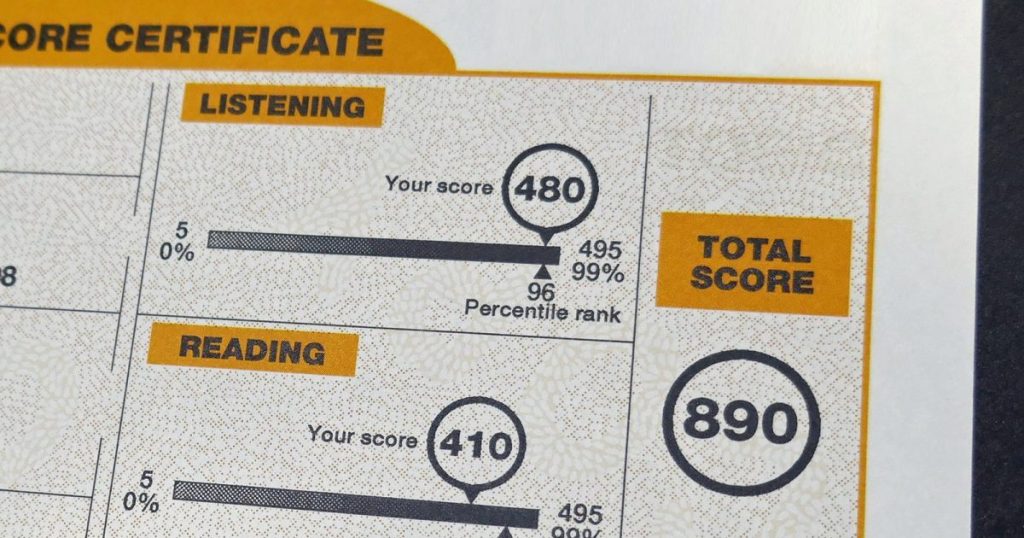
TOEIC is an English proficiency test widely recommended at high schools and universities alongside the Eiken (English Proficiency Test). It is best understood as a test that measures “how smoothly you can communicate in a business context.”
Administered by ETS (Educational Testing Service) in the United States, TOEIC does not use grade levels like Japan’s Eiken. Instead, it evaluates test-takers by score across the following five test formats.
- Listening & Reading Test (measures listening and reading ability): 990 points
- Speaking & Writing Tests (measures speaking and writing ability): 200 points
- Speaking Test (measures speaking ability only): 200 points
- Bridge Listening & Reading Tests (beginner/intermediate version of ①): 100 points
- Bridge Speaking & Writing Tests (beginner/intermediate version of ②): 100 points
About 90% of TOEIC test-takers take the ① test, and companies almost always evaluate based on ① as well.
The test uses a multiple-choice format, making it more accessible for those who struggle with written responses. However, since the minimum benchmark is 730 points out of 990, with 800 or more considered business-level proficiency, adequate preparation is still necessary.
TOEFL
TOEFL stands for “Test of English as a Foreign Language” and, like TOEIC, it is a test designed to measure English proficiency. Both are administered by the same organization, ETS, which is why some people take both tests. The key difference is that TOEIC tests English proficiency in business settings, while TOEFL tests academic English proficiency.
The exam covers four skills — Listening, Reading, Speaking, and Writing — in a balanced format, making it similar to a comprehensive English proficiency test. Unlike the multiple-choice format of TOEIC, answers require writing responses and speaking into a microphone, making it a test of applied English ability. The test is scored out of 120 points, and a score of 80 or above is generally considered a common benchmark. Having a TOEIC score of 800 or above or a TOEFL score of 80 or above could potentially give you an advantage in your job search.
High scores in both TOEIC and TOEFL can broaden your opportunities as a consultant, but if asked whether English ability is absolutely necessary, the answer is “not always.” While foreign-affiliated firms might give that impression, it is possible to work as a consultant without English skills.
Of course, some consulting firms have projects where team members are from overseas, or where international collaborations are frequent, making “English proficiency required (e.g., TOEIC score of XXX or above)” a stated condition. For this reason, always carefully review the job requirements of your target firm.
If you have the aptitude to be a consultant but struggle to carry out your work effectively because of your English ability, that is a serious problem.
What Do Consultants Do?
We’ve covered merits, demerits, and more — but some of you may still be wondering, “What exactly does a consultant do?”
Even within consulting, the work is actually divided into the following 7 types depending on the target industry and scope of work.
- Strategy consulting firms
- Comprehensive consulting firms
- IT consulting firms
- HR consulting firms
- Restructuring / turnaround consulting firms
- Financial advisory / FAS firms
- Healthcare consulting firms
“Being a consultant doesn’t mean you have to handle M&A advisory, business restructuring, and HR all at once,” so make sure to clearly understand the scope of work of any firm you’re considering joining.
Let’s now explain each type of consulting firm.
Strategy Consulting Firms
Strategy consulting firms primarily focus on developing strategies and providing advice to help client companies overcome management challenges they are facing.
Their characteristics and work content are as follows.
【Characteristics of Strategy Consulting Firms】
- Tend to be engaged by relatively large companies and organizations
- Compensation is relatively high, but so is the level of difficulty
- In recent years, clients increasingly expect more than just recommendations
【Main Work of Strategy Consulting Firms】
| Details | |
|---|---|
| Strategy formulation support | M&A strategy Medium- to long-term growth strategy Group management strategy, etc. |
| Projects addressing specific business or functional challenges | Strategy for entering new markets New business strategy HR strategy / new products New product development strategy / marketing strategy, etc. |
While the table above outlines the core work, the scope can extend further — for example, taking on business due diligence when a client is considering an investment. Clients also vary widely and are not restricted to specific industries; strategy consulting firms frequently receive work from public-sector organizations such as government agencies in addition to companies across various sectors.
In recent years, the scope of work for strategy consultants has also been evolving. In the past, the typical flow was “receive an engagement → prepare a report → present → once the client approves, the work is done.” More recently, however, it has become increasingly common to provide support not just through recommendations but also in how those strategies should be executed. A well-crafted strategy means nothing if it cannot be put into action, which is why companies have increasingly begun to seek support all the way through to producing results. This trend is expected to continue, meaning that in addition to communication and presentation skills, strong judgment will also be required.
Furthermore, since larger, more financially capable companies are naturally drawn to strategy consulting to improve their performance, fees tend to be set at a higher level.
Comprehensive Consulting Firms
As the name suggests, comprehensive consulting firms are firms that “provide a wide range of services to a diverse clientele.” They were once commonly referred to as accounting-based firms, but following repeated mergers, restructurings, and the dissolution of capital ties, the current name has become standard.
Their characteristics and work content are as follows.
【Characteristics of Comprehensive Consulting Firms】
- Relatively large in scale compared to other consulting firms
- Handle a wide variety of management challenges
- Teams are often divided by area of expertise
- Projects can span several years
【Main Work of Comprehensive Consulting Firms】
| Area of Focus | Work Content | |
|---|---|---|
| Industry-specific teams | Manufacturing Financial services Energy Telecommunications, etc. | Required to advance projects while maintaining close communication with clients. Serves as the central role in each project and demands a wide range of capabilities. |
| Functional teams | Strategy Accounting HR and organizational design, etc. | Expected to have deep knowledge within their respective functional areas and to apply their expertise across any industry. |
In comprehensive consulting firms, industry-specific teams serve as the core of each project, maintaining close communication with clients. Counterparts are often at the managerial level or above, and strong interpersonal skills tend to be required just as much as — if not more than — pure consulting expertise.
Functional teams, on the other hand, are expected to have deep knowledge in their designated area and to apply their skills regardless of which industry they are serving. As this illustrates, a large number of people are involved in projects at comprehensive consulting firms.
Depending on the scale of a project, some engagements are carried out over a period of several years, which means team member turnover is not uncommon. The project is staffed dynamically, with the right people brought in as they are needed.
IT Consulting Firms
IT consulting firms specialize in supporting a company’s information technology (IT) strategy, with work that spans system design and implementation, driving digital transformation, optimizing IT infrastructure, and cybersecurity measures.
By combining IT knowledge with a deep understanding of business, they advise clients on how to leverage the latest technologies, improve operational efficiency, and strengthen their competitive edge.
Specific examples of their work include the following.
| Systems Integration | Integrating existing systems and new software to streamline business processes across the organization. |
| Digital Transformation | Introducing new digital technologies to transform business models and operational processes. |
| Cloud Solutions | Supporting the adoption of cloud computing to build flexible and scalable IT infrastructure. |
| Cybersecurity | Implementing security measures to protect a company’s information assets. |
| Data Analytics | Leveraging big data to support data-driven decision-making. |
Working at an IT consulting firm requires strong technical skills as well as the ability to understand client business needs and deliver appropriate solutions. Flexibility to keep pace with rapid technological changes and a commitment to continuous learning are also essential.
HR Consulting Firms
HR consulting firms are consulting firms that primarily deal with human resources-related matters. Their characteristics and work content are as follows.
【Characteristics of HR Consulting Firms】
- Involved in work in a very dynamic and hands-on way
- Still relatively small in scale in Japan
- Some firms specialize in specific areas
- Their importance is expected to grow going forward
【Work Content of HR Consulting Firms】
- Research on executive compensation systems
- Review of performance evaluation and compensation systems
- Organizational integration support during M&A
- HR due diligence
- Talent development support
- Support for organizational culture and workplace transformation
And more
These firms are most active during periods of major organizational change, such as when HR systems are being overhauled or when an M&A has just taken place. Since the work touches on some of the most critical aspects of a business — hiring and workforce planning — making proposals that truly earn the client’s understanding is essential.
This field is dominated by foreign-affiliated firms, and in Japan the scale remains relatively small. Most firms have around 100 or fewer employees, so targeting one as a new graduate may be a somewhat high bar.
The work also often requires specialized knowledge, and the high volume of work means practical experience is frequently expected. Some firms cover all of the above service areas, while others specialize in areas such as training and development programs. While it is a challenging field to enter without HR experience, it is one where demand in Japan is expected to grow in the future.
Restructuring / Turnaround Consulting Firms
Restructuring and turnaround consulting firms focus on reviving companies that are in financial difficulty.
Their characteristics and work content are as follows.
【Characteristics of Restructuring / Turnaround Consulting Firms】
- Centered on restoring and reviving businesses
- Projects are often carried out in collaboration with consultants from other specialisms
- Demand can spike significantly depending on the global economic environment
【Work Content of Restructuring / Turnaround Consulting Firms】
- Preparing business revival plans
- Supporting financing from financial institutions
- Negotiating debt forgiveness
- Supporting the execution of restructuring
And more
In the restructuring consulting space, it is still uncommon for a single firm to handle the entire restructuring process end-to-end. As a result, many projects are carried out with the support of other consulting firms.
Demand also fluctuates significantly depending on the state of the world. For example, the Great East Japan Earthquake and the COVID-19 pandemic — which spread globally around 2021 — generated significant demand from many companies seeking restructuring support. Since similar situations may arise in the future, a steady level of demand is expected to continue.
Financial Advisory / FAS Firms
Financial advisory consulting firms are consulting firms that focus on resolving challenges related to M&A and financial matters. “FAS” stands for “Financial Advisory Service,” and the two terms are often used interchangeably.
Their characteristics and work content are as follows.
【Characteristics of Financial Advisory / FAS Firms】
- Highly specialized due to the granular nature of the work
- Professionals from a variety of consulting backgrounds can thrive here
- Some firms specialize exclusively in M&A
- Expected to continue growing in the future
【Work Content of Financial Advisory / FAS Firms】
| Details | |
|---|---|
| M&A Advisory | ・Target identification for acquisitions ・Due diligence ・Deal structuring ・Business valuation ・Negotiation support ・Overall deal management ・Post-merger integration (PMI) support, etc. |
| Business Restructuring Support | ・Support for formulating business restructuring plans ・Coordination with stakeholders ・Sponsor selection ・Execution of restructuring plans, etc. |
Financial advisory consulting firms handle an extremely detailed scope of work — in addition to the above, this can include business valuation and forensic investigations, among other services. The scope may range from covering a broad range of advisory services to focusing solely on specific functions such as business valuation or due diligence.
Another distinguishing feature is that the granular nature of the work makes it an environment where professionals from other consulting backgrounds can also excel. In recent years, Japanese companies have been actively pursuing M&A deals, including acquiring overseas companies. As a result, financial advisory / FAS firms are expected to continue growing and are attracting increasing attention.
Healthcare Consulting Firms
As the name suggests, healthcare consulting firms handle all matters related to the healthcare sector. This includes private clinics, large university hospitals, and nursing care facilities, among others.
Their characteristics and work content are as follows.
【Characteristics of Healthcare Consulting Firms】
- Smaller in scale compared to other consulting firms
- Some firms operate with only a small number of staff
- The scope of work is surprisingly broad
- Demand is expected to grow in the future
【Work Content of Healthcare Consulting Firms】
- Medium- to long-term strategic planning support
- M&A planning and financing
- Operational improvement
- Support for facility rebuilding or sales
- Market analysis for new clinic openings
- IT digitalization support, such as implementing electronic medical records
- Property selection and development
- Support and agency services for administrative procedures
- Business succession support for the next generation
And more
It may be hard to imagine hospitals and the consulting industry intersecting, but until around the 2000s, healthcare institutions were primarily focused on patient treatment and research, with management often taking a back seat. However, as poor financial management undermines the ability to provide care and conduct research, consulting firms dedicated to the healthcare sector began to emerge.
Healthcare consulting firms tend to be small in scale compared to other types of consulting firms, with most employing anywhere from a handful to several dozen people. That said, the scope of work is surprisingly broad, and tackling these challenges requires extensive knowledge and strong analytical skills.
Despite their current small scale, healthcare consulting firms are expected to see growing demand going forward. This is because Japan’s population is aging at a faster rate than other developed nations. As medical and nursing care facilities become increasingly important, the quality of services they provide will also need to rise. As a result, what are now small consulting firms in this space may grow into organizations of several hundred people in the future.
3 Steps New Graduates Should Take to Get into the Consulting Industry
If reading this has made you think, “I want to give consulting a shot!” here are the steps you should take to get there.
<3 Steps New Graduates Should Take to Get into the Consulting Industry>
- Consult a job-hunting agency with expertise in the consulting industry
- Participate in internships at consulting firms
- Attend job-hunting events
(1) Consult a Job-Hunting Agency with Expertise in the Consulting Industry
Preparation and strategy are essential if you want to join a consulting firm. However, there are limits to what you can accomplish on your own. That’s why we recommend “consulting a job-hunting agency that specializes in the consulting industry.”
Using a recruitment agency can help you understand the following.
- Whether you are suited to consulting
- Which consulting firm is the best fit for you
- The typical path from application to offer in the consulting industry
- How to write your resume and application essays (ES)
- Practical interview coaching
- Group discussion preparation
And more
Since the consulting industry uses unique selection processes, having a professional guide your preparation from their perspective can make a significant difference.
(2) Participate in Internships at Consulting Firms
If you want to join a consulting firm as a new graduate, participating in early internships is considered essential. Some companies will not advance you to the main selection process unless you have taken part in their early internship. For this reason, be sure to regularly check whether your target firms are offering early internship opportunities.
Sites like “Good Find” allow you to check for events and early internship information, so be sure to take a look.
(3) Attend Job-Hunting Events
Attending job-hunting events held in various locations is also recommended for new graduates aiming to join a consulting firm. Beyond the chance to discover new companies, these events can give you an edge in the selection process and may also offer the opportunity to speak with consultants who are already active in the industry.
Learning about the industry firsthand is also highly likely to be useful in future interviews. With that in mind, try to prioritize events that have a strong presence of consulting companies.
【2026 Edition】 7 Job-Hunting Agencies and Sites for New Graduates Aiming to Become Consultants
The desire to “become a consultant” is real — but landing a job in the consulting industry is far from easy.
Here, we introduce 7 job-hunting agencies and sites that can help new graduates secure a position even in the competitive consulting industry.
- Known for thorough consultations! “Mynavi New Graduate Introduction”
- Get an offer in as little as one week! “doda New Graduate Agent”
- Thorough support from consultation to offer! “Rikunabi Job-Hunting Agent”
- Great even if you’re feeling anxious! Personalized support from “Career Ticket”
- Packed with company columns and event info! “type Shukatsu Agent”
- A job-hunting site with over 400,000 student reviews! “ONE CAREER”
- Share information across fields via LINE open chats! “unistyle”
While the focus is on services for new graduates, we’ll also introduce 3 agencies that are especially recommended for those aiming to become consultants.
Known for Thorough Consultations! “Mynavi New Graduate Introduction”
One service that almost always appears when you search for job-hunting agencies is “Mynavi New Graduate Introduction,” run by the major brand Mynavi. It has an extensive listing of job openings, and compared to other agencies, it also holds a larger number of exclusive, non-publicly advertised positions. The usability and overall design of the site are of high quality as well — making it one of the agencies you simply can’t go wrong signing up with.
The biggest feature of Mynavi New Graduate Introduction is that a dedicated advisor will provide sincere, personalized support. Job hunting as a new graduate carries a unique kind of pressure that’s different from studying for exams. Even something as seemingly straightforward as writing a resume can be difficult to do perfectly on your own.
Mynavi New Graduate Introduction offers the following support to help new graduates navigate the job-hunting process effectively.
【Support Offered by Mynavi New Graduate Introduction】
- Advice on how to write your resume and prepare for interviews
- Guidance on how to choose the right industry for you
- Overall job-hunting advice
- Advocating on your behalf to companies
The consulting industry is selective and competitive, making it difficult to navigate on your own. Mynavi New Graduate Introduction also handles consulting industry positions, making it a valuable resource for those targeting that field.
Get an Offer in as Little as One Week! “doda New Graduate Agent”
doda New Graduate Agent is operated by a joint venture between doda, a major job site, and Benesse, a leading education company — giving it an exceptionally strong level of credibility.
The biggest feature of doda New Graduate Agent is its volume of job listings, which surpasses other agencies. With partnerships with over 7,000 companies, the chances of finding a company that matches your profile are high. It’s particularly recommended for those who think, “Quality matters, but I also want as many options as possible.”
Among the quality positions listed, you’ll also find openings at top industry-leading companies that virtually everyone has heard of. Of course, it’s not just large corporations — many white-collar companies with solid leave policies and generous benefits are also listed, so signing up and browsing is well worth it.
In addition, doda New Graduate Agent has advisors who will recommend a curated selection of positions from their vast listings based on your preferences. The quality of job-hunting support is also high — advisors take time to thoroughly clarify your strengths, interests, and aptitudes from multiple angles. Furthermore, most of the career consultants in charge hold the “GCDF (Ministry of Health, Labour and Welfare certified)” credential, providing added peace of mind.
Thorough Support from Consultation to Offer! “Rikunabi Job-Hunting Agent”
Rikunabi Job-Hunting Agent is a new graduate placement service operated by Recruit Agent. It is extremely well-known as a recruitment agency, and most job-seeking students will have come across it at some point.
The standout feature of Rikunabi Job-Hunting Agent is its “thorough support through to receiving an offer.” It covers everything from crafting compelling resumes and application essays to preparing for group interviews and individual interviews. Even executive-level interviews, which many candidates struggle with, are thoroughly prepared for — so you can feel confident going in.
It also features a large volume of job listings, including non-public positions, with consulting industry openings among them. Advisors will select suitable positions from the wide range available to minimize any mismatch, helping you navigate your job search more effectively. For those who feel a strong sense of anxiety about job hunting, starting with Rikunabi Job-Hunting Agent is a highly recommended approach.
Great Even If You’re Feeling Anxious! Personalized Support from “Career Ticket”
Not receiving any job offers during your search is not uncommon. Many new graduates feel the pressure of thoughts like “I need an offer soon… graduation is right around the corner…” For those in that situation, Career Ticket — where job-hunting professionals provide thorough, dedicated support — is highly recommended.
The biggest feature of Career Ticket is that professionals “provide intensive, one-on-one support.” This covers everything from how to choose companies, to self-analysis, document preparation, and interview coaching. If you’re feeling uncertain about navigating your job search alone, give it a try.
Another notable feature of Career Ticket is that it screens out questionable employers, listing only companies where new graduates can build a stable, long-term career. This is reassuring for those who aren’t confident in their ability to identify problematic workplaces on their own — worries like “What if they introduce me to a bad company?” or “What if I can’t tell it’s a bad company before it’s too late?” simply don’t apply here.
Packed with Company Columns and Event Info! “type Shukatsu Agent”
type Shukatsu Agent is a job-hunting agency provided by Career Design Center, a comprehensive human resources company. Like other job-hunting agencies, it carries a wide range of job listings — but what sets it apart is the depth and variety of information it offers beyond just job postings.
【Information Available on type Shukatsu Agent】
- The latest news on job hunting
- Company-specific columns
- Information on job-hunting events
And more
It’s particularly recommended for job-seeking students who think, “I don’t just want to find a listing, write a resume, and wait for an interview — I want to take a more proactive approach to my job search!” Notably, it’s also available to first- and second-year university students, so those who want to get a head start on their job search early can use it too.
In addition to events for first- and second-year students, it also hosts programs such as a Tokyo job-hunting camp for students based in regional areas. This makes it a great choice for those thinking, “I’m based in the countryside now, but I want to work in Tokyo in the future.”
A Job-Hunting Site with Over 400,000 Student Reviews! “ONE CAREER”
ONE CAREER is a new graduate recruitment site that has earned strong support from many students. With over 400,000 reviews from job seekers, it’s an invaluable resource for those just beginning their job search.
In recent years, as the number of student users has grown, more large corporations have begun posting listings — including consulting firms.
Highlights
- Read real user reviews on job listings
- Major companies participate in company information sessions
- Online joint company information sessions are held
The site is highly rated by users for being easy to navigate and for not sending unnecessary emails — both of which contribute to its strong reputation.
Share Information Across Fields via LINE Open Chats! “unistyle”
unistyle is another job-hunting site recommended for students. One of its particular strengths is that you can view the employee satisfaction (ES) reports submitted by people who successfully received offers from your target companies. Being able to review ES reports before joining a company helps ease pre-employment anxieties.
Highlights
- View employee satisfaction (ES) reports from people who received offers at major companies
- Share job-hunting information with students across Japan via LINE open chats
- See application deadlines at a glance
unistyle also opens up group chats where students can share information about specific companies and industries. By joining groups relevant to your area of interest, you can access useful and relevant information, which may help smooth your path to receiving an offer.
Frequently Asked Questions for New Graduates Joining a Consulting Firm
Finally, here are answers to 3 frequently asked questions from new graduates considering joining a consulting firm, presented in a Q&A format.
- What kind of person is suited to becoming a consultant as a new graduate?
- What abilities are needed to become a consultant as a new graduate?
- Are there any required qualifications to work as a consultant?
The article was not found.
Summary
Consulting is one of the most popular career choices among new graduates for the following 7 reasons.
- You can develop your skills
- You gain experiences not available at typical business companies
- Salary increases and promotions are possible based on performance
- You can adapt to the culture of the consulting industry
- You can build confidence
- You can leverage your strengths
- You can acquire skills essential for running a business
As outlined above, the prospect of developing valuable skills and earning a high income draws many people to pursue a career in consulting. However, it is not a field you can easily break into.
In addition, while academic background has traditionally been heavily weighted in consulting hiring, in recent years there is a growing trend toward hiring candidates with specialized industry knowledge. If you have a strong desire to work as a consultant, it is worth taking on the challenge.
People who are well-suited to consulting include those with the following characteristics.
- People who don’t find studying a burden
- People who are curious
- People who think positively
- People who are strong with numbers
- People who can listen to others’ opinions
- People who have ambition
- People who have strong communication skills
- People who have logical thinking ability
Since consultants need to provide clients with the latest information and well-grounded proposals, continuous learning to stay current is indispensable. Those who are curious by nature and don’t find studying a burden are well-suited to a consulting career.
While consulting is undeniably a highly competitive field, using a job-hunting agency can give you access to specialized support tailored to breaking into the consulting world. If you’re aiming for a consulting career, we strongly encourage you to make use of a job-hunting agency and approach your job search with every advantage at your disposal.


